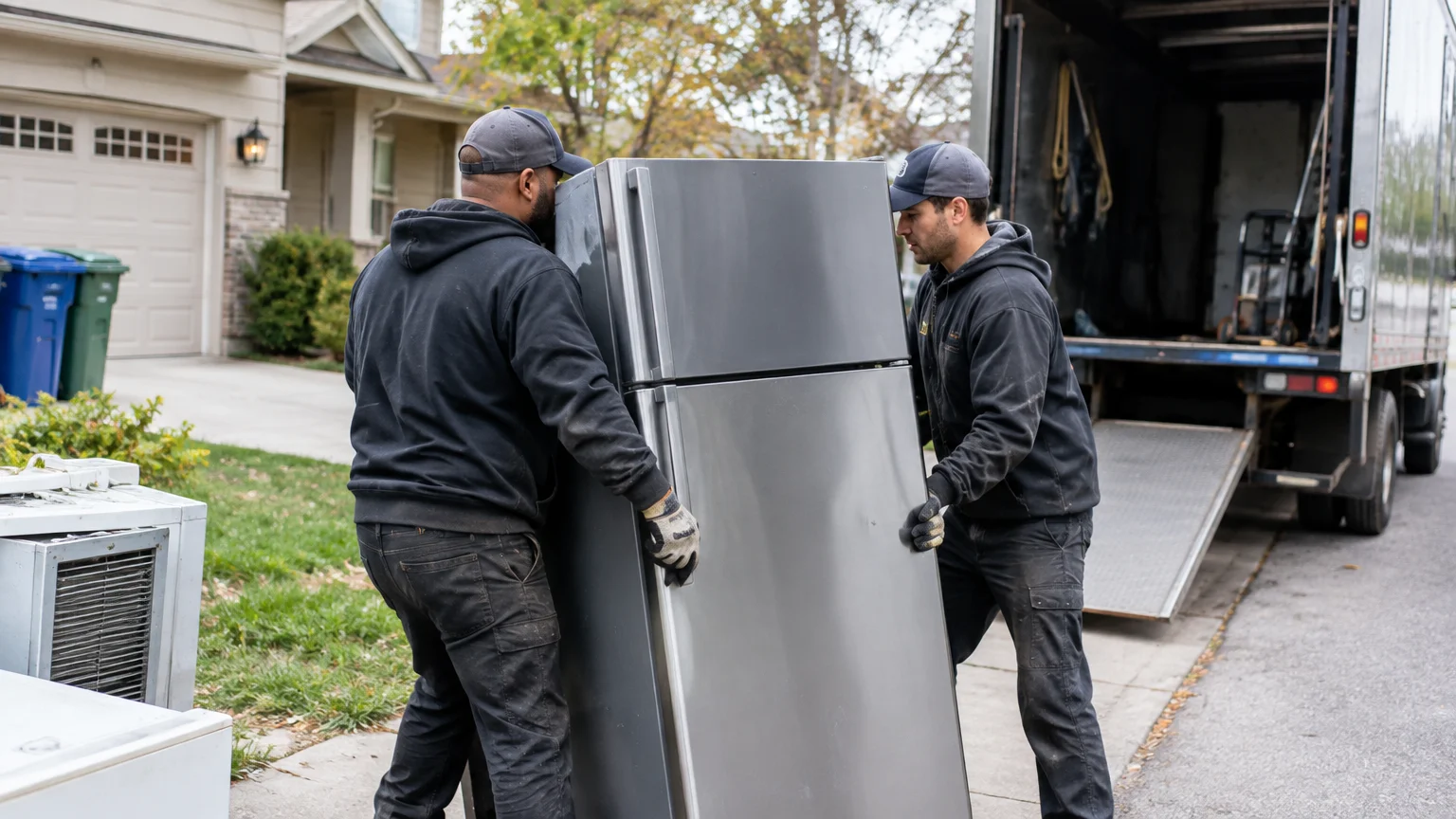
To schedule appliance pickup without delays, share the appliance type, size, location, access details, and preferred date first. Empty food, water, dishes, and loose parts before the visit. A clear path and safe disconnection help remove refrigerators, washers, dryers, stoves, and dishwashers with less stress for everyone.
What information do you need to schedule appliance pickup?
To schedule appliance pickup, the provider needs clear facts about the item and property. This helps the team bring the right vehicle, tools, and crew. It also helps avoid issues when an appliance is behind a gate or in a tight space.
Waukesha WI Junk Removal can help homeowners, landlords, office managers, and property pros plan the pickup. A short item description helps, but photos may show the pickup path better. Tell the provider if the appliance is inside a home, in a garage, on a porch, or outside.
Which appliances can typically be collected?
Most appliance pickup services collect large home appliances. Common items include refrigerators, freezers, washers, dryers, stoves, ovens, ranges, and dishwashers. Some providers may also take smaller appliances, water heaters, or commercial equipment. This depends on local rules and the service area.
Mention unusual items before booking. A large commercial freezer, built-in oven, or basement appliance may need extra planning. The same is true for items at an office, rental home, storage space, or work site. Sharing these details early lets the provider confirm whether the item fits the service.
What details should you share before pickup day?
Share the appliance type, size, number of items, floor level, and removal spot. Also mention stairs, narrow doors, elevators, long paths, locked gates, and parking limits. Tell the provider if the appliance is built into cabinets or connected to special lines.
A useful pickup request includes:
- The appliance brand and type, if known
- The number of items ready for removal
- The room or outdoor area where each item sits
- Stairs, tight turns, gates, elevators, or other access concerns
- Whether each appliance is empty, disconnected, and ready to move
- Photos that show the item and its path to the vehicle
The main Waukesha area includes Downtown Waukesha and the Fox River District. It also includes Brookfield, New Berlin, Pewaukee, Delafield, and nearby communities. These areas have homes, rental properties, businesses, and other local spaces. Clear details help Waukesha WI Junk Removal plan a safer visit across Waukesha and nearby areas.
How should you prepare appliances for pickup?
Appliances should be empty, clean enough to handle, and disconnected when needed. Homeowners can usually remove food, clothing, dishes, shelves, and loose parts themselves. They should not cut gas lines, wires, water lines, or refrigerant tubes without the right training.
Preparation helps protect the property, the crew, and people nearby. It also lowers the chance that an appliance must stay behind because it remains connected. The provider can explain what must happen before arrival.
How do you disconnect and empty refrigerators, washers, and dishwashers?
Empty all food and drinks from a refrigerator. Remove or secure loose shelves and bins. Unplug the unit only when it is safe. Keep the doors closed or secured so they do not swing during movement. Refrigerators and freezers may contain refrigerant, which helps cooling systems make cold air.
A washer should be empty and drained. Someone who understands the water shutoff should disconnect the hoses. A dishwasher should be empty and disconnected from power and water when needed. A qualified person should handle connections that are not safe for a homeowner. Towels or a shallow container can catch small amounts of leftover water.
Dryers and stoves need care as well. Electric units must be disconnected safely. Gas appliances should be shut off and disconnected by a qualified professional. Never force a gas fitting or cut a power cord to make removal faster.
What access and safety issues should you check?
Clear the path from the appliance to the pickup area. Move boxes, rugs, toys, small furniture, and other trip risks. Keep children and pets away from the work area. Check that doors open wide enough and that halls allow careful movement.
Tell the team about steps, uneven ground, wet areas, loose railings, and low ceilings. An appliance may seem easy to move but become hard at a tight turn or narrow door. If a door, cabinet, or railing must come out, ask about it before pickup day.
How do appliance pickup rules vary by appliance type?
Appliance disposal rules depend on the item, its parts, and local rules. Cooling appliances often need different handling than washers, dryers, stoves, and dishwashers. A responsible appliance recycling service separates useful metal and other materials when possible.
Rules may also differ by county, utility program, transfer station, and waste facility. Waukesha WI Junk Removal can explain the usual removal process for customers in the surrounding Waukesha area. The provider should confirm any special handling before the appointment.
What should you know about refrigerators and other cooling appliances?
Refrigerators, freezers, and some window air conditioners may contain refrigerant. Refrigerant is a chemical that helps a cooling system make cold air. Ask the pickup provider how it should be handled before the appliance is recycled or processed.
Do not puncture, drain, or take apart a cooling appliance. Do not place one beside the curb unless local instructions allow it. The provider may need to know if the unit is sealed, damaged, or missing parts.
Old freezers and refrigerators may be collected through appliance removal services, local recycling programs, or utility programs. The best choice depends on the item and local rules. A provider can explain whether the appliance is ready for recycling, reuse, or another approved option.
How are washers, dryers, stoves, and dishwashers handled?
Washers, dryers, stoves, ovens, and dishwashers often contain metal and other parts that can be recycled. They may go to a recycling facility after safe removal. Items with gas lines, broken glass, sharp edges, or heavy parts need extra care.
A stove or dryer with a gas connection should be handled after the gas supply is safely shut off. Report a broken oven door or cracked cooktop before pickup. Dishwashers and washers may hold water, which can leak during loading if they are not drained.
Businesses and rental property owners should mention several appliances at once. A turnover, office update, or cleanout may include furniture, boxes, or renovation debris too. A junk removal provider can help manage appliance removal along with other items.
How can you prevent delays on appliance pickup day?
The best way to prevent delays is to confirm the item list, access route, utility status, and pickup window. Have each appliance in the agreed spot unless inside removal was confirmed. Clear communication matters when a property has stairs, tenants, security rules, or limited parking.
A quick check the day before can catch missing details. It gives the property owner time to finish safe preparation or ask questions. This helps with commercial spaces and rental homes where another person may need to open the property.
What should you confirm with the pickup provider?
Confirm which appliances are included and where they are located. Ask if the team can remove items from inside the property. Confirm whether doors or gates must be unlocked and whether someone must be present. The pickup window and property instructions should be clear.
Before the visit, confirm:
- The full list of appliances ready for collection
- The location of each item inside or outside the property
- Any stairs, elevators, narrow doors, gates, or parking limits
- Whether each appliance is empty and safely disconnected
- Any broken glass, leaks, sharp edges, or unstable parts
- Who will provide access if the property is occupied or managed remotely
A reminder can prevent a failed visit caused by a locked gate, missing item, or unsafe connection. It also helps the crew protect walls, floors, doors, and other property features.
What happens when an appliance cannot be safely removed?
A pickup provider may leave an appliance in place when it is connected to gas, trapped in a structure, leaking, unstable, or blocked by unsafe conditions. This choice protects people and property. The provider should explain what must change before removal can continue.
A homeowner may need a qualified electrician, plumber, gas technician, or appliance repair pro first. The provider may also suggest clearing the path, securing pets, fixing a damaged doorway, or arranging building access. Never pressure a crew to move an unsafe appliance.
Key takeaways
- Share the appliance type, number, size, location, and access details early.
- Empty refrigerators, washers, dryers, stoves, and dishwashers before pickup.
- Use a qualified professional for gas, electrical, water, or refrigerant connections.
- Keep paths clear and report stairs, gates, tight turns, leaks, and broken parts.
- Confirm the item list and access plan before pickup day.
Frequently Asked Questions
Who takes old freezers?
Junk removal companies, appliance recyclers, transfer stations, and some local programs may take old freezers. Keep the freezer intact unless a qualified professional prepared it. The provider may ask if it is empty, easy to reach, and still sealed. Local rules can affect the available recycling or disposal option.
Can a pickup team remove an appliance from a basement?
A pickup team may remove a basement appliance if the stairs, doorway, and route are safe. Describe the stairs, turns, ceiling height, and appliance size before booking. Photos can help the provider review the path. Unsafe or blocked access may need preparation first.
Should a homeowner disconnect an old gas stove?
A homeowner should not disconnect a gas stove without proper training and permission. The gas supply must be shut off safely. The connection should not be forced or cut. A qualified gas professional can prepare the appliance before the pickup team arrives.
Can a pickup service recycle appliances?
Many pickup services send appliances to recycling or approved disposal facilities when possible. Metal, wiring, and other materials may be separated after safe processing. Refrigerators and freezers need special care because of refrigerant. Ask how each appliance type is handled before collection.
Conclusion
Good preparation makes appliance pickup easier for everyone. Share clear details, empty each appliance, protect the access path, and arrange safe disconnection when needed. Waukesha WI Junk Removal helps property owners plan appliance removal for homes, rentals, offices, and commercial spaces.
Contact us to arrange appliance pickup with Waukesha WI Junk Removal and discuss the items that need removal.