A junk haul clears unwanted furniture, equipment, and other bulky items from a workplace. For a smooth office cleanout, sort items first, plan building access, and set aside electronics and private records. Waukesha WI Junk Removal helps Waukesha businesses plan a haul around their space and needs.
Table of Contents
- What does a commercial junk haul include?
- When should a business schedule an office junk haul?
- How should you prepare an office for junk hauling?
- How are desks, cubicles, and bulky office items removed?
- How should businesses handle electronics and sensitive materials?
- What affects the scope of a commercial junk haul?
- How can you choose a reliable commercial junk removal service?
- Frequently Asked Questions
- Key takeaways
- Conclusion
What does a commercial junk haul include?
A commercial junk haul takes unwanted items out of a business space. It may include office cleanouts, furniture removal, and other things that are no longer needed. The work depends on what must go, how the building is set up, and what the business wants to keep.
Common items removed during an office cleanout
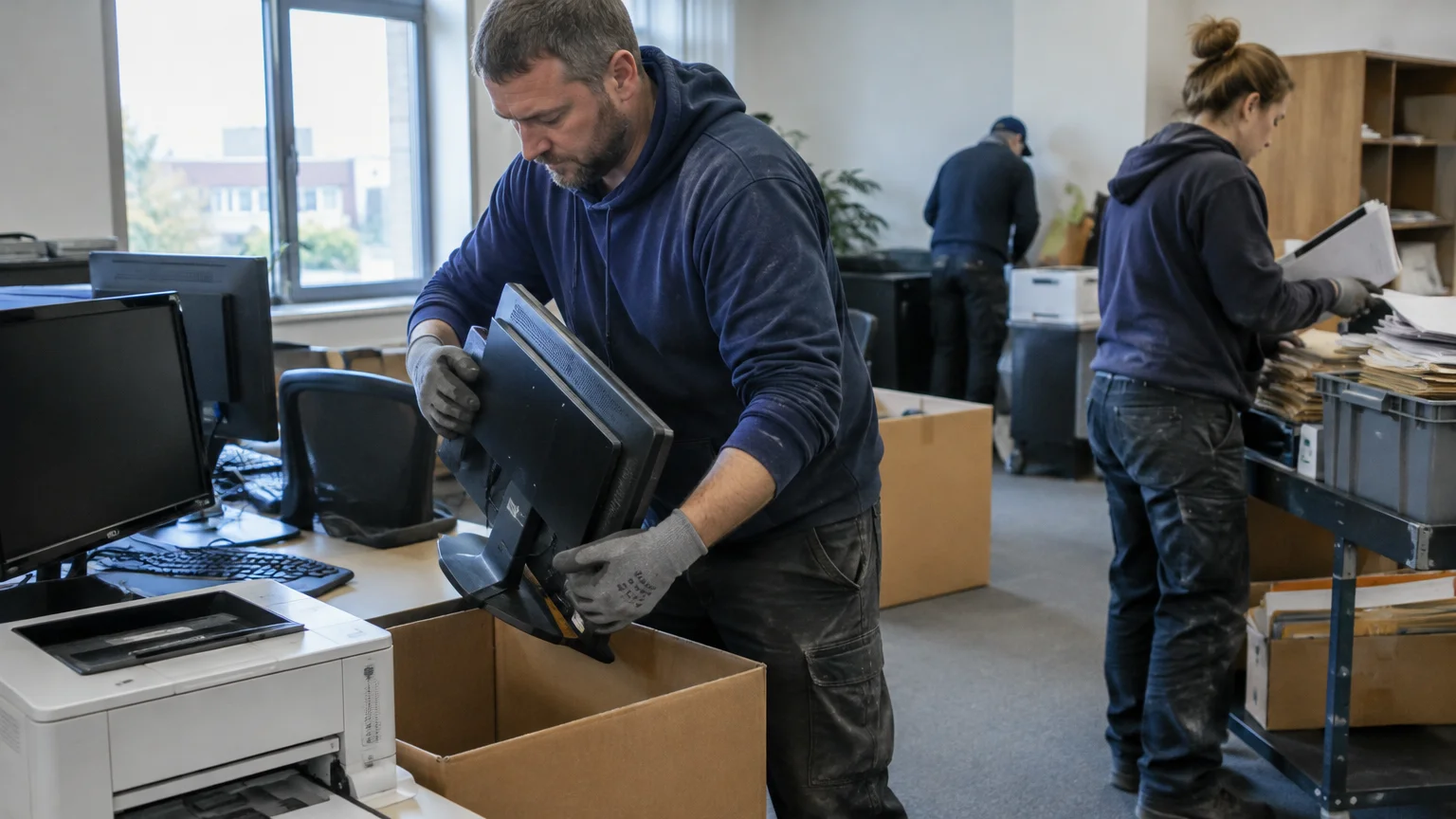
An office cleanout may include desks, chairs, filing cabinets, tables, shelves, and cubicle parts. A business may also need to clear old décor, supplies, broken furniture, or items in a storage room. Some jobs include appliances, such as a break-room fridge, but ask first how these items can be handled.
A clear list helps prevent mix-ups. Mark the items that should leave, and label anything that must stay. If older furniture is still in good shape, staff can decide whether to reuse or donate it before planning the cleanout. Broken items may need a different plan from usable desks or chairs.
How office junk hauling differs from routine waste removal
Routine waste removal usually takes everyday rubbish from normal business activity. A commercial junk haul handles larger items, bulky loads, or a full office clearout. It may also need more planning because of shared halls, elevators, building access, and safe work areas.
A business may need to remove office junk before new furniture arrives or after staff move. A property manager may need to clear an empty suite before showing it to new tenants. Waukesha WI Junk Removal can help businesses discuss what the job includes and plan for items that need special care.
When should a business schedule an office junk haul?
A business should plan a junk haul when unwanted items block work, take up useful space, or need to go before a move or renovation. Planning early gives staff time to sort items and helps the building team prepare. It can also help limit disruption while the office remains open.
Office moves, renovations, and lease transitions
A move is a good time to review desks, chairs, and storage items. The business can choose what will go to the new space and what is no longer useful. Sorting before moving day helps avoid taking unwanted items to another office and clearing them later.
Renovations can also call for a cleanout. A contractor may need an open room for repairs or new fixtures. Before work starts, confirm what must leave, what can stay, and when the space needs to be clear. Share the plan with staff who use the rooms.
Lease changes need careful planning. Property managers and tenants should agree on which items belong to the business and which are part of the building. Check the move-out rules and the date the office must be empty. A written list can help everyone follow the same plan.
Reducing clutter in active workplaces
A cleanout can help when extra furniture, old supplies, or broken items make rooms hard to use. Businesses do not have to wait for a big move. They can plan a smaller removal when clutter fills meeting areas, storage rooms, or paths employees use each day.
Staff should not have to guess what can be removed. Ask team leads to check shared rooms and mark items that are still needed. Keep walkways clear while sorting, and do not stack heavy items where they might fall. For ongoing clutter, set a simple routine to review unused items before they spread into more work areas.
How should you prepare an office for junk hauling?
Prepare an office by sorting items, protecting things that must stay, and sharing clear details about the building. Good planning helps the crew work in the right areas and reduces confusion for employees and property staff. It also gives the business time to handle records and devices safely.
Identify items for removal and items to keep
Walk through the office before the planned haul. Make a list of furniture, equipment, and other items that should leave. Mark items that must stay with clear signs, and move small valuables or personal belongings away from the work area.
A simple sorting plan can use these groups:
- Furniture and fixtures approved for removal.
- Electronics that need separate handling.
- Documents and files that must stay private.
- Items to keep, reuse, or give to another team.
- Items that need review before a final choice.
Do not wait until the crew arrives to make decisions. Empty desks and cabinets that hold files or personal items. Choose one staff member to answer questions about unclear items and confirm what can go. That person can help keep the work on track.
Coordinate access, building rules, and employee communication
Tell the service team where the office is, what items are involved, and what limits affect access. Note stairs, elevators, loading areas, narrow doors, or rules for shared spaces. The building manager may need to approve a time or reserve an elevator.
Tell employees which rooms will be cleared and what they should take from their desks. Share the plan with reception, security, and property staff when needed. If the business will stay open during the cleanout, agree on how workers and visitors can avoid the work area.
How are desks, cubicles, and bulky office items removed?
Desks, cubicles, and other large items are removed by planning how to take them apart, carry them, and move them through the building. The right plan depends on the item, the route, and whether it can leave in one piece. Sharing details ahead of time helps avoid delays.
Planning disassembly and safe movement
Some desks and cubicles must be taken apart to fit through a doorway or into an elevator. Point out built-in units, attached shelves, and workstations with cables or shared parts. Do not pull items apart before checking whether they connect to equipment the office still uses.
Staff can help by clearing drawers and surfaces, removing personal items, and marking parts that should stay. Do not ask an employee to lift or take apart a heavy unit unless they are trained and it is safe. A professional crew can check the item and plan a route based on its size.
Protecting hallways, elevators, and shared spaces
Before work starts, clear the path from the office to the building exit. Move loose items out of hallways and tell the crew about tight doors or corners. If other tenants share the space, follow building rules for noise, access, and loading areas.
A property manager may ask for floor or wall protection in busy areas. Ask how the team plans to protect shared spaces and keep the work area tidy. Good planning matters in buildings with many tenants, where employees, visitors, and other crews may use the same halls.
How should businesses handle electronics and sensitive materials?
Businesses should keep electronics and private materials apart from general office junk before the haul. Computers, monitors, printers, and similar items may need special handling. Private files and stored data need their own safe plan, not a place in a general removal pile.
Separate electronics from general office junk
Set aside computers, screens, printers, phones, and other electronic equipment. Ask how these items will be handled and whether the business needs a separate electronics recycler. Do not assume every junk hauling service accepts every kind of device.
Before equipment leaves, follow the business’s rules for data and devices. A qualified staff member or IT provider can remove business data and confirm the device is ready to go. Keep cords, accessories, and equipment for reuse in a separate, marked area.
Appliances also need a clear plan. If the office needs to remove a fridge, ask whether the service accepts it and whether it needs preparation. Empty the fridge first. For any item with special disposal rules, check with the local waste authority or a suitable recycler.
Protect confidential records and workplace data
Do not put confidential files in a general junk pile. Keep paper records in a secure place and follow the company’s rules for keeping or destroying them. Staff should check drawers, cabinets, and boxes before approving them for removal.
Old devices can still hold digital information, even when files no longer appear on screen. The business should use an approved process to erase or destroy data before equipment leaves its control. If staff are unsure, ask the IT or records team to review the item first.
What affects the scope of a commercial junk haul?
The scope of a commercial junk haul depends on the amount and type of material, the building layout, and the timing. Sharing these details early helps the business and service team plan the right crew, access, and handling steps. The final plan should match the actual items and site conditions.
Volume, item type, access, and scheduling considerations
The amount of furniture and other items is one part of the job. Removing a few chairs differs from clearing a whole office floor. Large items, heavy cabinets, cubicle walls, and appliances may need more planning than loose office supplies.
Access can change the plan. A ground-floor suite with a clear loading area differs from an upper-floor office with limited elevator access. Stairs, long halls, set building hours, and shared entrances are useful details to share before the work is booked.
Timing matters, too. A business may need the work done before a lease deadline, renovation, or move. Share the date and any limits on when the crew can enter. If items need special handling, explain that early instead of waiting until removal day.
How to request a clear plan for an office cleanout
To request a clear plan, describe the items, the space, and the building rules. Photos or an item list can help explain the job. Mention electronics, appliances, heavy furniture, and anything that must not be removed.
Ask what the business needs to prepare, how access will work, and which items the service can accept. A written plan can make each person’s role clear for the business, property manager, and removal team. Confirm the agreed work before the set day, especially if the item list or access changes.
How can you choose a reliable commercial junk removal service?
Choose a commercial junk removal service that listens to the business, explains its plan, and answers questions about handling and access. The right fit should understand that an office cleanout means more than carrying items out of a room. It also calls for care with shared spaces, devices, and records.
Questions to ask about planning, handling, and disposal
Ask how the team plans to move large items, protect shared spaces, and handle electronics or appliances. Check whether it accepts the items on the list and can follow the building’s access rules. The business should also ask what needs to be ready before the crew arrives.
Useful questions include:
- Which items can the team remove from this office?
- How should the business prepare desks and cabinets?
- Can the team follow the building’s access rules?
- How are electronics and appliances handled?
- What should staff do with private records and data?
A clear answer is more useful than a broad promise. Share any special needs and ask who will confirm the item list. If a service cannot take a certain item, arrange another suitable option before cleanout day.
Frequently Asked Questions
How do businesses get rid of old office furniture?
Businesses can sort furniture into items to keep, reuse, donate, or remove. A commercial junk haul may help clear large or broken pieces. Before booking, list the items and check the building’s access rules. Remove files and personal belongings from desks and cabinets.
Can a junk removal service take office electronics?
Some services accept office electronics, but accepted items and handling plans can differ. Ask about computers, monitors, printers, and other devices before the cleanout. The business should also protect or remove data through an approved process before the equipment leaves the workplace.
How should a business prepare for an office cleanout?
Make a clear list of what should go and what must stay. Empty desks and cabinets, set aside electronics and private records, and tell employees which areas will be cleared. Share access details and building rules with the service team before the planned work.
Can an office cleanout include a break-room refrigerator?
It may, but first confirm that the service accepts appliances. Empty the fridge and ask whether it needs any other preparation. If it cannot be part of the cleanout, check with a local appliance recycler or waste authority for another option.
How can a business find junk removal near me?
A business can search for commercial junk removal in Waukesha or nearby service areas. These include Downtown Waukesha and the Fox River District, as well as Brookfield, New Berlin, Pewaukee, Delafield, and nearby communities. Compare services by asking about accepted items, access planning, electronics, and building rules. Sharing an item list helps the service understand the office’s needs.
Key takeaways
- A commercial junk haul can clear unwanted furniture, equipment, and other bulky office items.
- Sort items and protect private records before the crew arrives.
- Share building rules, timing needs, and special handling details early.
- Confirm that electronics and appliances can be accepted and handled as needed.
- A clear item list helps the business plan a smoother office cleanout.
Conclusion
An office cleanout works best when the business decides what should go, protects what must stay, and plans access early. A thoughtful plan helps employees, property managers, and the removal team work together with less confusion. Waukesha WI Junk Removal helps local businesses plan commercial cleanouts and nearby areas. Contact us to plan an office cleanout.
For more information about the business and its services, visit Waukesha WI Junk Removal.
If you are not sure what you are dealing with, it is worth having someone look at it before it turns into a bigger job. Get in touch with Waukesha WI Junk Removal today and we will tell you where you stand.