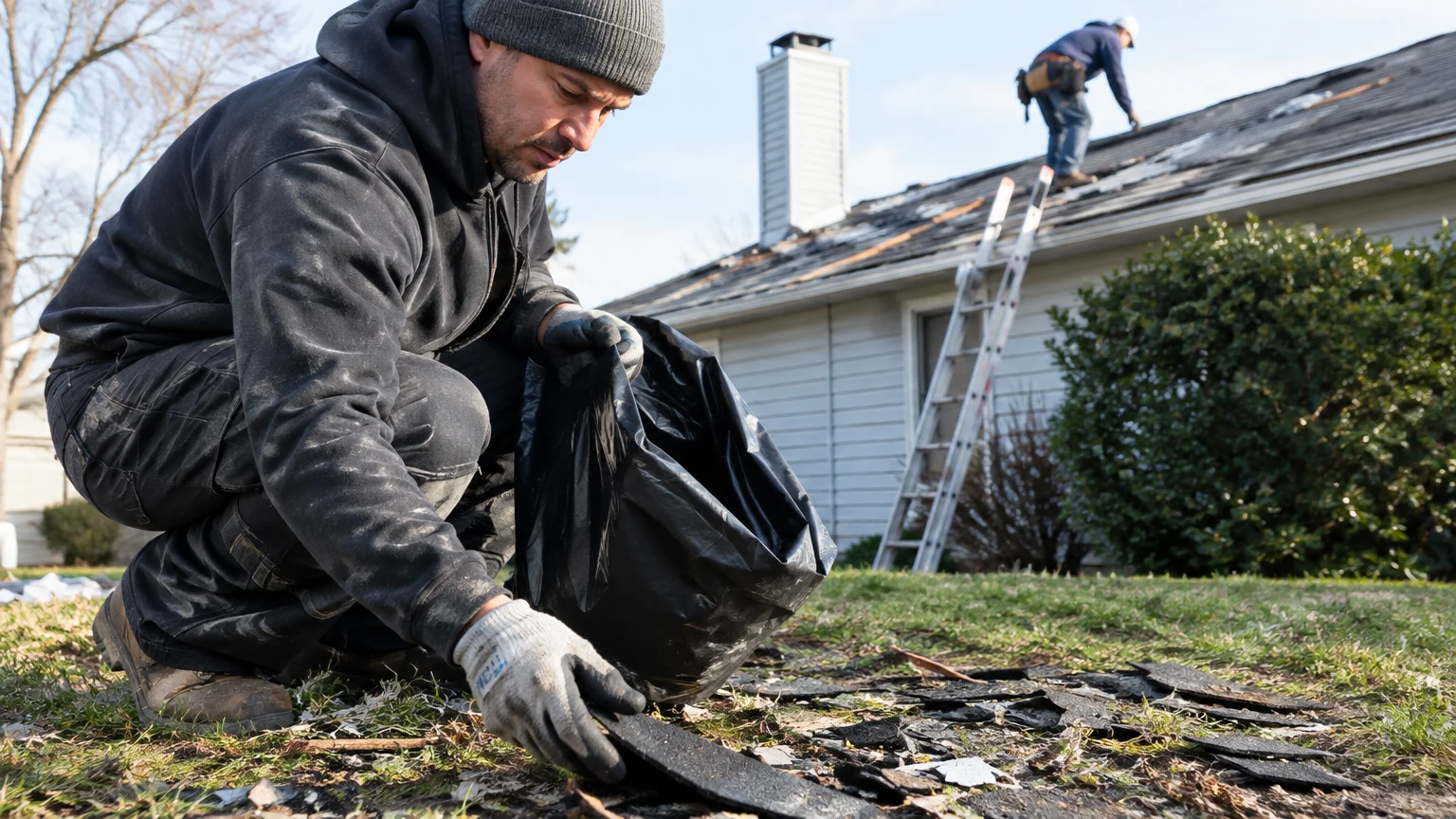
Roofing debris removal FAQs help homeowners, contractors, and property managers plan a safer cleanup. Roofing debris can include shingles, underlayment, flashing, and other tear-off waste. The amount, material type, site access, and disposal options all shape the plan. Knowing what to expect can help keep a roof project moving and the property clear.
Table of Contents
- What materials count as roofing debris?
- How much does roofing debris removal cost?
- When should roofing debris be removed?
- How is roofing debris sorted and disposed of?
- How can you keep a property safe during roofing cleanup?
- Can roofing debris be removed from a commercial job site?
- How do you choose a roofing debris removal service?
- Frequently Asked Questions
What materials count as roofing debris?
Roofing debris is the old material removed during a repair or roof replacement. It often includes shingles, underlayment, nails, flashing, and damaged roof edges. Cleanup can also include wood decking, vents, or old gutters when those items are part of the roofing work.
Underlayment is a protective layer beneath roof coverings. Flashing is thin material fitted around roof joints, vents, and chimneys to help keep water out. These parts may need different handling, so the removal crew should know what the roof work has produced before pickup.
Roof tear-off waste is different from general construction debris because it comes from the roof. It may have sharp edges or loose nails. A pile of shingles can also be heavy and awkward to move. Drywall, cabinets, and flooring may come from the same renovation, but they are separate waste types to mention when arranging cleanup.
A small repair may leave only a few bundles of shingles and some flashing. A full replacement can create a larger pile, along with underlayment and damaged wood. A clear list of materials helps the crew plan the right way to remove the debris. It also makes it easier to spot items that may need separate handling.
Waukesha WI Junk Removal can help homeowners and contractors plan roofing tear-off cleanup. Tell the team what work was done, what debris is present, and where the pile will sit. This matters for projects in Waukesha, including Downtown Waukesha and the Fox River District, as well as Brookfield, New Berlin, Pewaukee, Delafield, and nearby communities. Parking, access, and disposal choices may differ from one site to another.
If the project has other renovation waste, mention it before arranging cleanup. This could include concrete chunks, appliances, or old furniture. Those items are not roofing debris, but a full-service junk removal company can discuss a separate or combined cleanup plan.
How much does roofing debris removal cost?
The final cost depends on the amount and type of debris, how easy it is to reach, and the available disposal options. Roofing debris removal may involve more lifting and handling than a small indoor cleanup because shingles and wood can be heavy and bulky. The final cost is confirmed on a quote after the job details are reviewed.
Several details can affect the work involved. A small pile beside a clear driveway is different from loose debris spread around a building or placed behind a fence. Extra sorting, a long carry, limited truck access, and mixed renovation waste can also change the cleanup plan.
The amount of debris is not the only thing that matters. Clean, separated materials may be easier to handle than a pile mixed with household trash, wet insulation, or damaged wood. A large roof job may leave more debris than a small patch repair. Hard-to-reach piles can also require more work, even when they are not very large.
When comparing roofing cleanup with other construction debris hauling, think about weight and handling as well as pile size. A light load of packaging is different from dense shingles or concrete. Ask whether the service accepts each material and whether the pickup plan covers the full pile.
To help the service review the job, describe the project, the debris, and where it is located. Photos can help if the service accepts them, but they do not replace details about access and material types. The final cost cannot be confirmed until the job is understood.
This planning can also help contractors avoid delays after the roofing work ends. Say whether the pile is in a driveway, on a lawn, or near a busy entrance. If appliances or furniture are part of the larger renovation, describe those items too. The service can then consider the full cleanup rather than only the roof waste.
When should roofing debris be removed?
Remove roofing debris when the work area is safe and the crew can reach the pile without getting in the way of roof work. Some jobs need cleanup while work is underway. Others are best cleared after the final roofing task. The roofing contractor and removal crew can agree on timing based on safety and access.
A planned pickup can help keep paths, driveways, and work areas clear. For a larger roof replacement, the roofing crew may gather debris in one agreed spot as work continues. This can make final cleanup easier, but the pile must not block workers, residents, or equipment.
A pickup after the project may suit a small repair or a site where workers need room to move. The roofing contractor should first check that tear-off work is done and loose material has been gathered. Do not schedule removal while workers are still carrying debris through the same area.
Weather, access, and changes to the work can affect the pickup plan. Rain may make some materials harder to handle. Parked cars or a blocked driveway can limit truck access. If the work changes and creates more debris, tell the removal service before pickup.
For a smooth handoff, the contractor can mark the pickup area and tell residents or tenants when access is needed. Keep the pile away from doors, paths, and vehicle spaces when possible. At a shared site, tell people which area must stay clear during removal.
Waukesha WI Junk Removal can coordinate roofing debris removal after the project team confirms what is ready to go. A quick review of the pile and access route can help everyone agree on a practical pickup time. Keep loose nails and sharp scraps away from places where workers, residents, or pets may walk.
How is roofing debris sorted and disposed of?
Roofing debris may be sorted by material when the job and local disposal options allow it. Shingles, metal flashing, wood, and mixed waste can each need different handling. The removal provider can explain which materials it accepts and how it plans to handle the load.
Some materials may be suitable for recycling or other recovery. Others may need disposal. The right option depends on the material’s condition, nearby facilities, and local rules. Do not assume every shingle, piece of metal, or roofing product belongs in the same container.
Keep roofing debris apart from household trash when you can. Do not add paint, chemicals, or other items that may need special handling. If a project includes old appliances, ask how those should be managed. Local rules and accepted services for appliances may differ from roofing cleanup.
The age and condition of the debris can matter too. Wet, broken, or mixed materials may need more care than a clean pile of separated shingles. If the contractor thinks a material may be hazardous, do not treat it as ordinary junk. Stop handling it and ask a qualified professional what to do next.
Disposal rules vary by location. A service familiar with Waukesha and Wisconsin can explain what it accepts for a specific job. Share details before pickup, especially if the pile includes roofing products beyond common shingles, underlayment, or metal flashing.
Clear sorting helps the crew choose a safer and more suitable disposal route. It can also prevent mix-ups when the pile contains other renovation waste. Before the cleanup, the removal provider should explain what it accepts and any limits that may apply.
How can you keep a property safe during roofing cleanup?
Keep people away from the active work area and debris pile until the roofing crew says it is safe. Shingles can hide nails, and broken wood or metal edges can cut skin. A clear boundary helps protect residents, workers, customers, and pets during cleanup.
Move vehicles, bins, and outdoor items away from the planned work area. Tell the crew about narrow paths, soft ground, landscaping, and places where a truck cannot turn safely. These details can help avoid damage to driveways, lawns, and planted areas.
Homeowners can do simple checks and basic upkeep without climbing or touching sharp debris. They can keep people and pets away, clear small items from the access path, and tell the contractor about hazards. A removal professional is not needed just to keep the area clear or share access details.
A professional should handle heavy piles, sharp tear-off waste, and materials that may be hazardous. Do not climb onto the roof, reach into the debris, or try to move a heavy load by hand. If nails or sharp scraps are scattered, keep others away and ask the roofing crew how to make the area safe.
Before pickup, agree on where the crew can park and where the debris is stored. Keep doors, fire exits, sidewalks, and business entrances open when possible. If the pile is near a public path, use a safe barrier approved for the site rather than leaving loose material exposed.
After removal, check the work area from the ground for leftover scraps. The roofing contractor can say whether a final sweep is part of its work. Do not handle unknown materials or climb up to inspect the roof. Ask the contractor to check any concern.
Can roofing debris be removed from a commercial job site?
Yes, roofing debris can be removed from many commercial sites when the materials, access, and pickup plan are clear. A good plan accounts for workers, tenants, customers, deliveries, and business hours. The site manager should share any access rules before setting a pickup time.
For an active job site, choose where debris will be gathered and how the removal crew can reach it. Keep the pile away from loading areas, building entrances, and paths used by workers or customers. If roofing work is still underway, choose a time that does not interrupt the crew.
Property owners and managers can plan around tenants as well. A notice can help people move vehicles or avoid a temporary work area. If the crew needs a shared driveway or loading dock, confirm who can approve access and when it is open.
Before pickup, tell the service what materials are on site and how they are stored. Say whether the debris is loose, bagged, or in a container. Mention stairs, gates, or narrow lanes that may affect access. Accurate details help the crew prepare for the actual job.
Contractors can make pickup easier by keeping roofing debris separate from drywall, wood, concrete, and general trash. If the materials cannot be kept apart, describe the mixed pile clearly. The service can then confirm whether it accepts the full load or needs a different plan for some items.
A site manager should name one person who can answer access questions on pickup day. This helps when several crews or businesses share the property. With clear timing and a safe pickup area, roofing debris removal can fit around the site’s daily work.
How do you choose a roofing debris removal service?
Choose a service that can explain which roofing materials it accepts, how it handles access, and what it needs before pickup. Ask about shingles, underlayment, flashing, wood, and mixed renovation waste. Clear answers can help prevent a missed pickup or a pile the crew cannot take.
What should you ask before scheduling?
Ask how the service handles the materials at the site and whether it can reach the planned pickup area. Find out what details it needs about the pile, access, and timing. If the project includes concrete chunks or old furniture, ask whether those items need a separate plan.
Also ask who should gather the debris and whether the roofing contractor needs to finish first. A removal service may have limits on some materials or unsafe loads. Clear questions make it easier to compare services and know what to expect.
People planning retail or office work may also look for retail removal FAQs or office cleanout FAQs. Those jobs can include different waste from roofing tear-off work. Explain the items in the pile so the service can confirm whether they fit the cleanup plan.
What should you confirm on pickup day?
Confirm that the pile is ready, the route is open, and the right person can meet the crew if needed. Keep vehicles and people clear of the work area. If the pile has changed since the service reviewed it, share the update before removal starts.
Waukesha WI Junk Removal can help property owners, contractors, and remodelers plan roofing debris cleanup. Across the Waukesha area, describe the materials, point out access limits, and confirm the pickup plan. These details help the service understand the work before the crew arrives.
Frequently Asked Questions
How do you get rid of old roof shingles?
Gather shingles in a safe, agreed-upon area after roofing work is complete. Keep them separate from household trash and tell the removal service what is in the pile. Disposal options vary by location, so ask whether the provider accepts the shingles and how it handles them.
Can roofing debris be removed during a roof replacement?
Yes, cleanup can happen during a roof replacement if the roofing crew and removal provider agree on safe timing and access. The pickup should not cross active work paths or block equipment. Some projects are easier to clear after tear-off work ends and the debris is gathered.
Can homeowners remove roofing debris themselves?
Homeowners can keep people and pets away, clear a safe access path, and share site details. They should not climb onto the roof or handle heavy piles, sharp shingles, or unknown materials. A professional is the safer choice for lifting, loading, and removing tear-off waste.
Can shingles and metal flashing go in the same load?
They may be collected together, but sorting depends on the service and local disposal options. Ask the provider before mixing materials. Keeping metal flashing apart from shingles can make the contents easier to identify and help the crew choose a suitable handling route.
What information helps arrange roofing debris removal?
Share the project type, materials, pile size and location, and any access limits. Mention whether other renovation waste is included. These details help the service decide whether it accepts the load and what must be ready before pickup.
Key takeaways
- Roofing debris can include shingles, underlayment, flashing, nails, and damaged wood.
- Material type, amount, access, and disposal options shape the cleanup plan and quote.
- Schedule pickup when the roofing crew can provide safe access to a ready pile.
- Keep people and pets away from sharp debris; do not climb or lift heavy loads.
- Ask the removal service what it accepts and how it handles each material.
Conclusion
A clear cleanup plan helps protect people and keeps roofing work moving. Identify the materials, agree on a safe pickup area, and share access details before removal. Local rules and accepted materials can vary, so confirm the plan with the service before the work is complete.
Contact us to arrange roofing debris removal for your project with Waukesha WI Junk Removal.